

Aircraft / McDonnell Douglas DC-10 Series
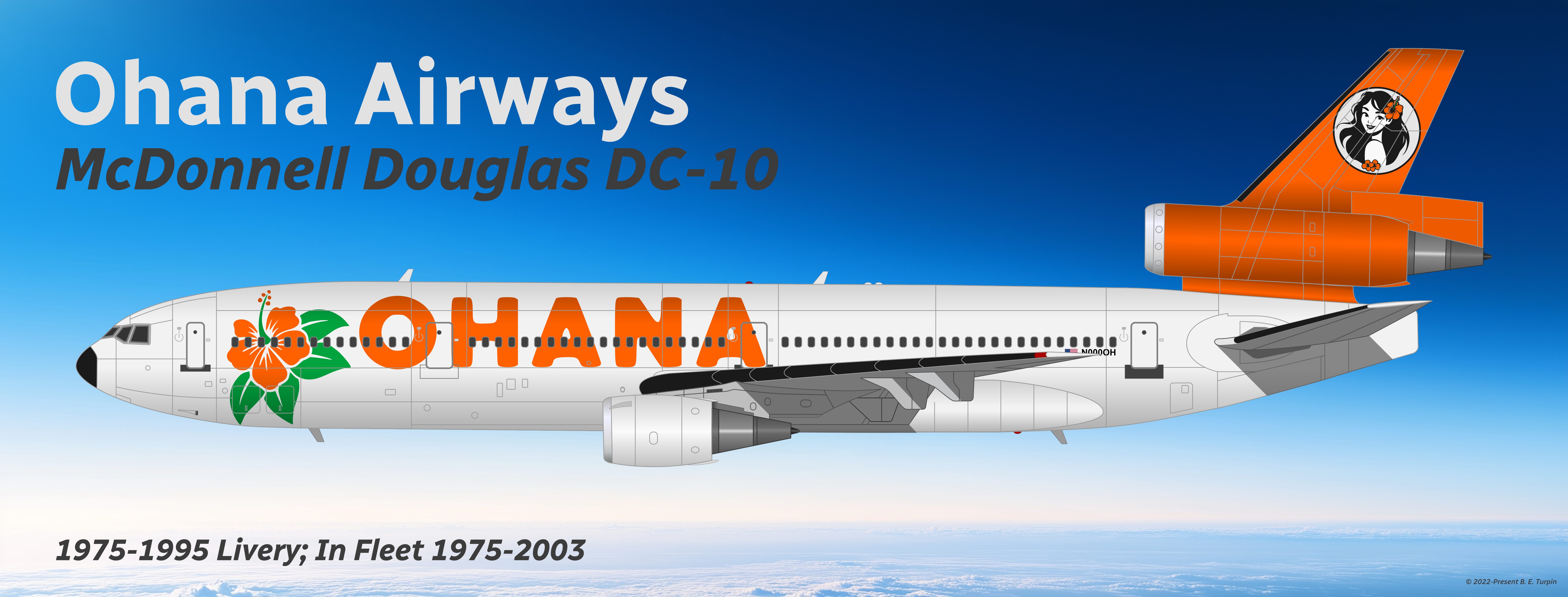
JStream Original Aircraft Templates
The McDonnell Douglas DC-10 Series is a collection of American trijet widebody jet airliners that were produced from 1969 to 1989 by McDonnell Douglas, an aerospace company based in Long Beach, California that was the progeny of a merger between the Douglas Aircraft Company and the St Louis, Missouri-based McDonnell Aircraft Corporation.
The McDonnell Douglas DC-10 series of jets were the 1st generation of trijet airliners built by Douglas/McDonnell Douglas. Developed as a replacement for the Douglas DC-8 family of aircraft, the DC-10 could carry 270-380 passengers on transcontinental and transatlantic routes. Notable for its distinctive third engine mounted at the base of the vertical stabilizer (the tail) of the aircraft, the DC-10 was also one of the last airliners that required a three-member pilot / copilot / flight engineer flight crew to operate it.
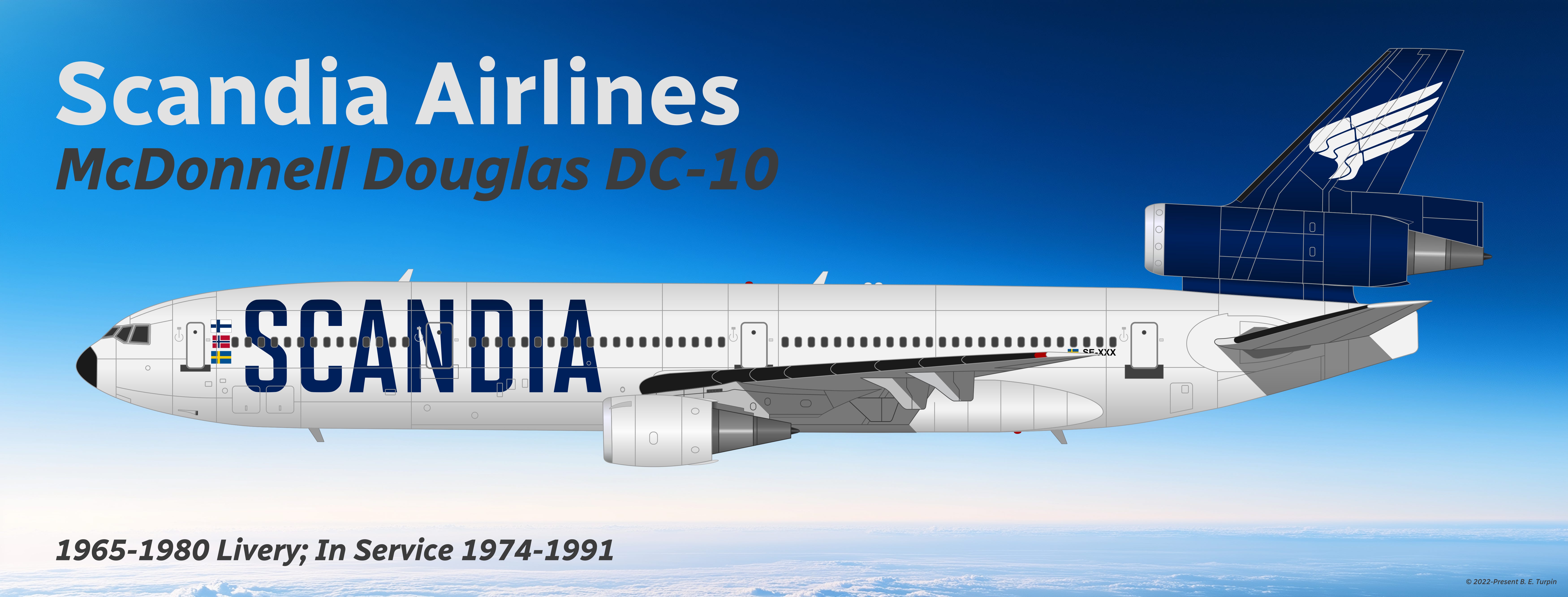
Numerous variants of the DC-10 series were built over its production lifespan, most of which were powered by General Electric CF6 engines.
The most important variants were:
The McDonnell Douglas DC-10-10, the baseline version, which had a range of 3500 nautical miles (nmi) (131 units built);
The McDonnell Douglas DC-10-15, which was designed to operate at hot and high airports (7 units built), but is otherwise essentially identical to the DC-10-10 model;
The McDonnell Douglas DC-10-30, a long-range version and the most popular selling version of the type, visually similar to the DC-10-10 but with a range of 5200 nmi (163 units built);
The McDonnell Douglas DC-10-30ER, an extended range version of the DC-10-30 with an additional fuel tank in the rear cargo hold, and a range of 5730 nmi (11 units built);
The McDonnell Douglas DC-10-40, a long-range version fitted with Pratt & Whitney JT9D engines (42 units built).
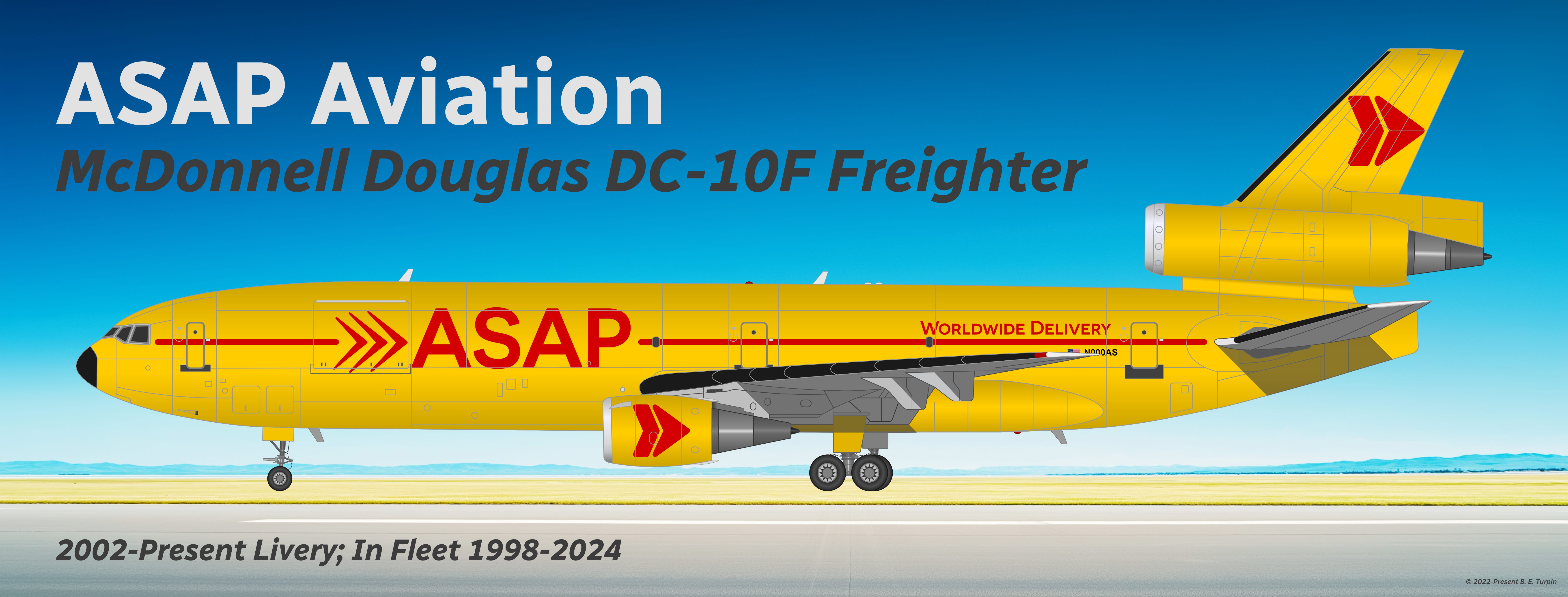
There were 2 freighter/combi versions of the DC-10:
The McDonnell Douglas DC-10-30AF, a dedicated freighter version of the DC-10-30 (10 units built);
The McDonnell Douglas DC-10-30CF, a convertible passenger/freighter version of the DC-10-30 with a cargo door installed on the forward port side of the fuselage (27 units built).
Aftermarket conversions to the DC-10 included the following:
McDonnell Douglas MD-10, which upgraded any DC-10 cockpit from standard analog dials and gauges to a glass cockpit configuration, and also eliminated the need for a flight engineer; and
The McDonnell Douglas DC-10(F) passenger to freighter (P2F) conversion program, which reconfigured any passenger DC-10 into a fulltime cargo aircraft by adding a cargo door to the front left side of the fuselage.
McDonnell Douglas ceased production of the DC-10 series of aircraft in 1989 after producing 386 units. It was superseded by the McDonnell Douglas MD-11 series, which was effectively an updated, stretched-fuselage derivative of the DC-10.
As of late 2025, 9 DC-10s remain in active service. Having made its final passenger flight in 2014, surviving DC-10s continue to operate worldwide as freighters, refueling tankers, and firefighting aircraft.
Reference: Wikipedia.
Stats
Stats displayed are for the McDonnell Douglas DC-10-30 model trijet aircraft.
Name: McDonnell Douglas DC-10
Origin: Long Beach, California USA
Role: Three Engine Widebody Jet Airliner
First Introduction: 5 August 1971
Status: Out of Production; In Limited Non-Passenger Service
Cockpit Crew: Three
Seating: 270-380
Engines:
3 x General Electric CF6; or
3 x Pratt & Whitney JT9D
Cruise Speed: 473-507 knots (876-940 km/h; 544-584 mph)
Range: 5200 nmi (9600 km; 6000 mi)