

Aircraft / Boeing 747-100
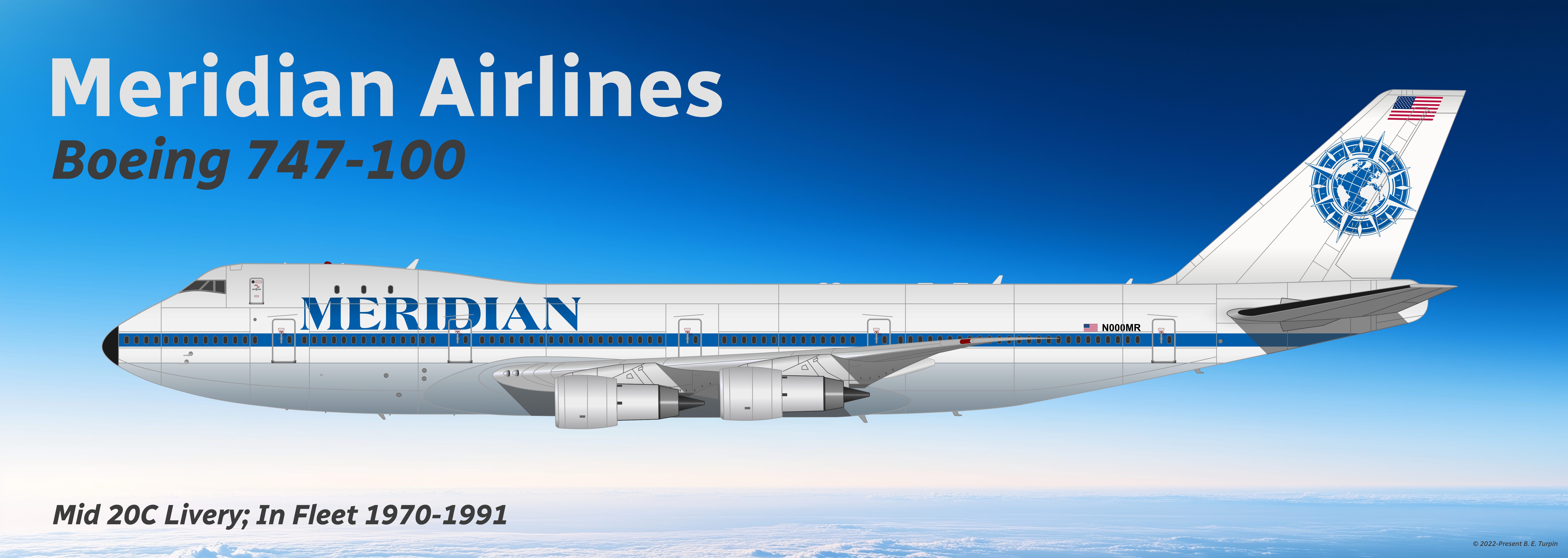
JStream Original Aircraft Template
A member of the legendary Boeing 747 family, the Boeing 747-100 is a large, wide-body, long range four-engine jet airliner manufactured by Boeing Commercial Airplanes, a division of The Boeing Company. Boeing Commercial Airplanes is headquartered in Renton, Washington USA, while the parent company’s head office is located in Arlington, Virginia USA.
Background
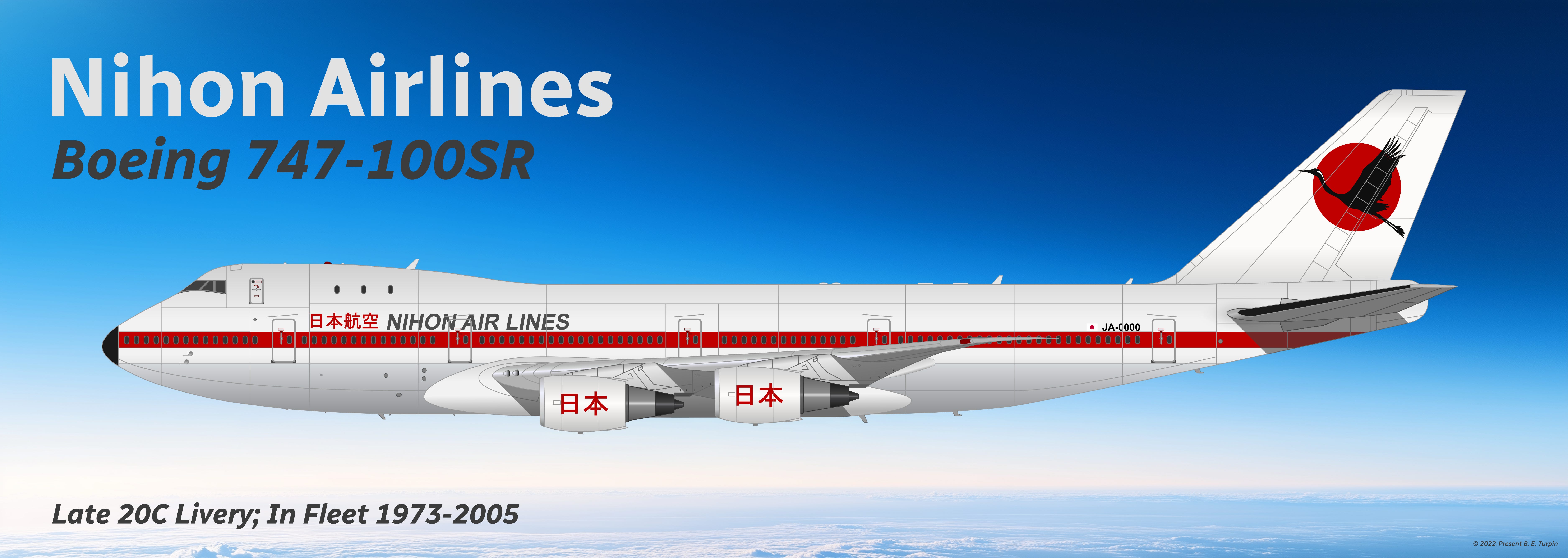
The Boeing 747-100 was the inaugural variant of the Boeing 747 family, as well as the first widebody passenger airliner to enter revenue service. The 747-100 program began in 1965 to answer rising demand for a larger passenger jet. Boeing started with a design proposal taken from a recently failed bid to build a heavy cargo jetliner for the United States Air Force.
The conventional wisdom of the time held that supersonic aircraft, such as Boeing’s own project, the Boeing 2707 SST, would soon supplant long range subsonic airliners in the same way that subsonic jets replaced turboprop airliners. To answer this concern, Boeing retained the Air Force’s Heavy Logistics System (CX-HLS) design requirements for its 747 architecture, so the company could be readily revamp the type into a heavy cargo jet should demand for the passenger version decline.
Because the CX-HLS requirement included a provision where the aircraft’s nose cone could be turned into a freight-loading door, the 747 design used a distinctive two-level configuration, with the cockpit placed in the forward portion of the upper deck well above the main deck. Designers added in a luxury lounge area behind the cockpit, which passengers could access from below using a spiral staircase.
The main deck was designed to include two aisles, instead of the usual single aisle layout. First class and/or business class cabins were set forth in the forward section in a 2-2-2 configuration, while the larger economy class cabin was placed in the aft section with either a 3-4-2 or 3-4-3 layout.
To fly such a massive aircraft, Boeing needed four jet engines that would not only provide twice as much power as the early generation turbojet engines available at the time, but would also use less fuel. To meet this requirement, the engine maker Pratt & Whitney created a new high-bypass turbofan engine specifically for the Boeing 747, the Pratt & Whitney JT9D powerplant.
Operational History
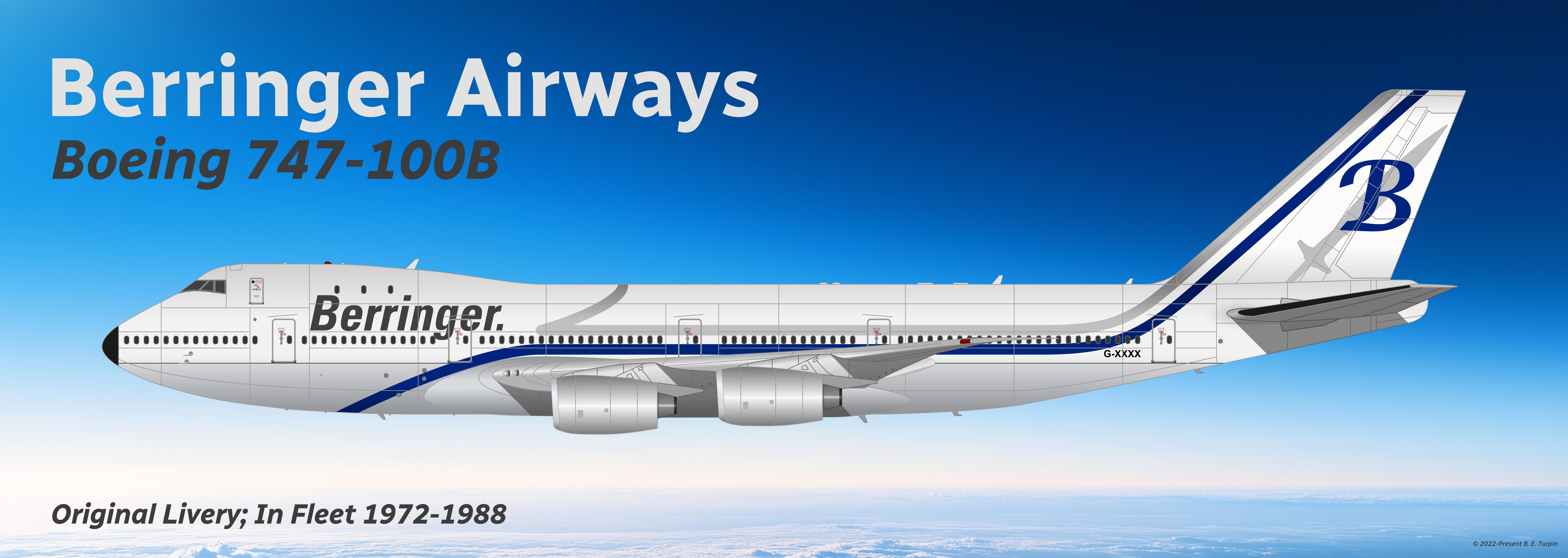
Despite having dealing with various technical issues that came up during its testing phase, the Boeing 747-100 received its airworthiness certificate in December 1969 and offered entered service in January 1970. Although a few technical issues arose early on, they were resolved and the 747 proceeded into full production and revenue service.
During its production history, the 747-100 was delivered in three major variants:
Boeing 747-100, the baseline model;
Boeing 747-100B, a higher maximum takeoff weight (MTOW) version; and
Boeing 747-100SR, a shorter range variant with higher passenger capacity sold mainly in Asian markets; and
Boeing 747-100BSR, a higher MTOW version of the 747-100SR.
Despite having been designed from the beginning so they could be repurposed to carry heavy cargo, Boeing did not sell a dedicated freighter version of the Boeing 747-100. Despite this, from 1974 onwards many 747-100s received aftermarket passenger to freight (P2F) conversions that transformed them into Boeing 747-100SF freighters.
Initially, the only engine option available for the 747-100 was the Pratt & Whitney JT9D-3A engine. Additional engine options were later added, including:
Rolls-Royce RB211-524, which typically powered the Boeing 747-100B, and
General Electric CF6-45A2, mainly used on the Boeing 747-100SR.
Post Production


Primary production of the Boeing 747-100 ended in 1976. While further production of the 747-100B variant was carried out until 1982, the Boeing 747-200, which entered production in 1971, became the flagship product of the Boeing 747 family of aircraft. In total, 205 examples of the Boeing 747-100 were built across its sub-variants, as follows:
747-100 - 167
747-100B/BSR - 29
747-100SR - 9
During the mid 1980s, two of the 747-100Bs were converted into Boeing 747-100B SUDs, which added a new Stretched Upper Deck (SUD). This upgrade became a standard feature on later 747 models, beginning with the Boeing 747-300.
When the 747-100 was first conceived, the upper deck was intended to serve primarily as a cocktail lounge area - a stylish premium space set apart from the main cabin below, which would feature an intimate bar or restaurant area with lounge-style seating, and sometimes even included a piano or organ for live entertainment. One could go upstairs and make themselves comfortable, read a newspaper or magazine, or perhaps share some wine and conversation with one’s fellow passengers.
With the arrival of the SUD, airlines began to repurpose the upper deck space to include more exclusive first class and/or business class seating. Over time, the lounge area began to give way to more premium seating, until it was either reduced to a small standup bar or eliminated entirely. The 747’s innovative upper deck airborne lounge concept would eventually reappear during the early 21st century, when a handful of luxury-based airlines started providing onboard relaxation areas on full-length double decked Airbus A380 airliners.
As of early 2026, a single Boeing 747-100 still remains in active service with the government of Iran.
Reference: Wikipedia.
Stats
Stats displayed are for the Boeing 747-100 quadjet aircraft.
Name: Boeing 747-100
Origin: Everett, Washington USA
Role: Four Engine Wide-body Jet Airliner
First Introduction: 22 January 1970
Status: Out of Production; In Limited Government Service
Cockpit Crew: Three (pilot, copilot, flight engineer)
Seating: 366 standard
Engines:
4 x Pratt & Whitney JT9D-3 or
4 x Rolls-Royce RB211-524 or
4 x General Electric CF6-45A2
Cruise Speed: 507 knots (939 km/h; 583 mph)
Range: 4620 nmi (8560 km; 5320 mi)