

Aircraft / Boeing 747SP


JStream Original Aircraft Template
A member of the legendary Boeing 747 family, the Boeing 747SP is a large, wide-body, long range four-engine jet airliner manufactured by Boeing Commercial Airplanes, a division of The Boeing Company. Boeing Commercial Airplanes is headquartered in Renton, Washington USA, while the parent company’s head office is located in Arlington, Virginia USA.
Background
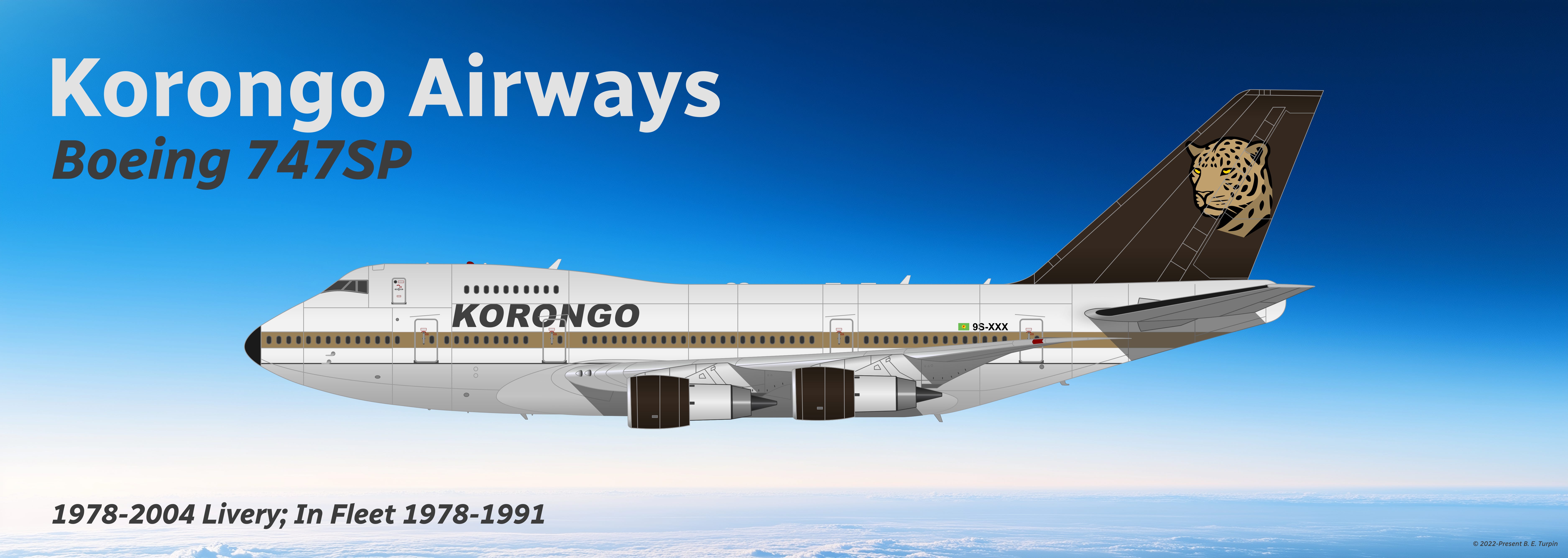
The Boeing 747SP is a truncated version of the Boeing 747 widebody passenger jet designed to provide a longer flight range than its fuller sized siblings of the day, the Boeing 747-100 and Boeing 747-200.
The type was developed in response to two emerging market needs:
To fill a gap in Boeing’s product range between the popular 169-seat narrowbody Boeing 707 and the fast-selling widebody 366-seat Boeing 747-200, to better compete against the McDonnell Douglas DC-10 and Lockheed L-1011 TriStar; and
To answer rising demand from airlines to produce a 747 derivative that could fly nonstop on longer routes, for example between New York and the Middle East.
Boeing was studying the possibility of producing a smaller twin-aisle airliner codenamed the Boeing 7X7 - which would later become the Boeing 767 - but otherwise Boeing had no mid-sized widebody airliner model on offer to compete meaningfully against the DC-10 and L-1011. The 7X7 project was not expected to reach the market until the late 1970s or early 1980s.
So Boeing decided to develop a new, short-fuselage derivative of Boeing 747-200, which was first named the Boeing 747SB with SB meaning Short Body. The goal was to truncate the 747-200’s fuselage length by 48 ft 4 in / 14.73 m in order to reduce its operating weight, improve its range and increase its cruising speed, at the expense of lowering the aircraft’s passenger seating capacity. For marketing reasons the project was soon renamed to Boeing 747SP, with SP meaning Special Performance.
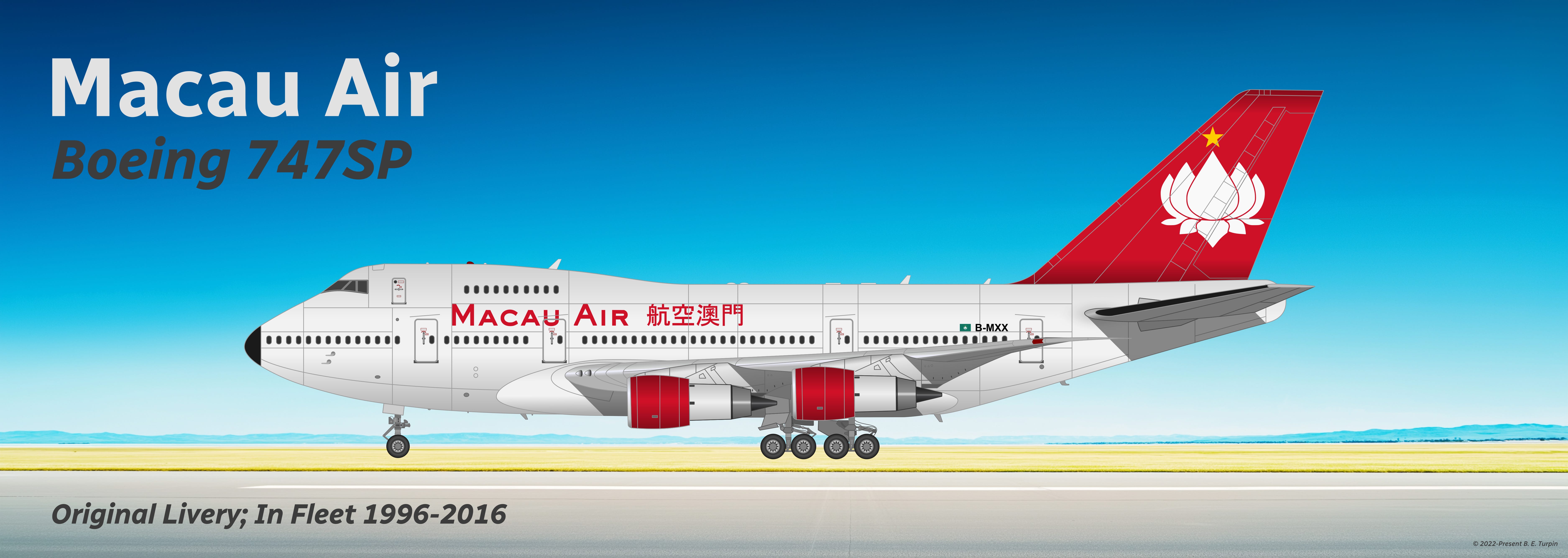
Early on a trijet design was considered, which by itself would’ve significantly reduced the aircraft’s weight and fuel usage. However, developing a version of the 747 with the 3rd engine passing through its tail proved to be too much of an engineering challenge and would’ve required a costly redesign of the 747SP’s wings. So the trijet proposal was discarded in favor of the existing four engine design.
By removing fuselage sections in front of and behind the wingbox, Boeing reduced its weight by 11,000 lbs / 4990 kg. Lighter materials were used to build its wings, and the 747’s flap mechanisms were modified such that the large underwing “canoe” fairings that housed them on larger 747s could be eliminated altogether. In total, the 747SP weighed in at 330,100 lbs / 152,906 kg versus the Boeing 747-200’s 375,100 lbs / 170,142 kg empty weight - a weight reduction of 45,000 lbs / 20,412 kg, or about 14%.
Because the 747SP had a significantly lighter airframe but retained the same engines as a full-sized 747, the 747SP exceeded many of its design estimates. Its flight range and performance specifications had been extended such that one of the prototype aircraft flew nonstop from New York to Tokyo in 13 h 33 m while carrying 200 passengers - a remarkable record at the time.
The development timeline for the Boeing 747SP was short and direct as airliner projects go, taking only 30 months to go from launch to service entry:
First 747SP Order: 10 October 1973
Rollout: 19 May 1975
First Flight: 4 July 1975
Airworthiness Certification: February 1976
First Delivery: 5 March 1976
Entry Into Service: 25 April 1976
Operational History
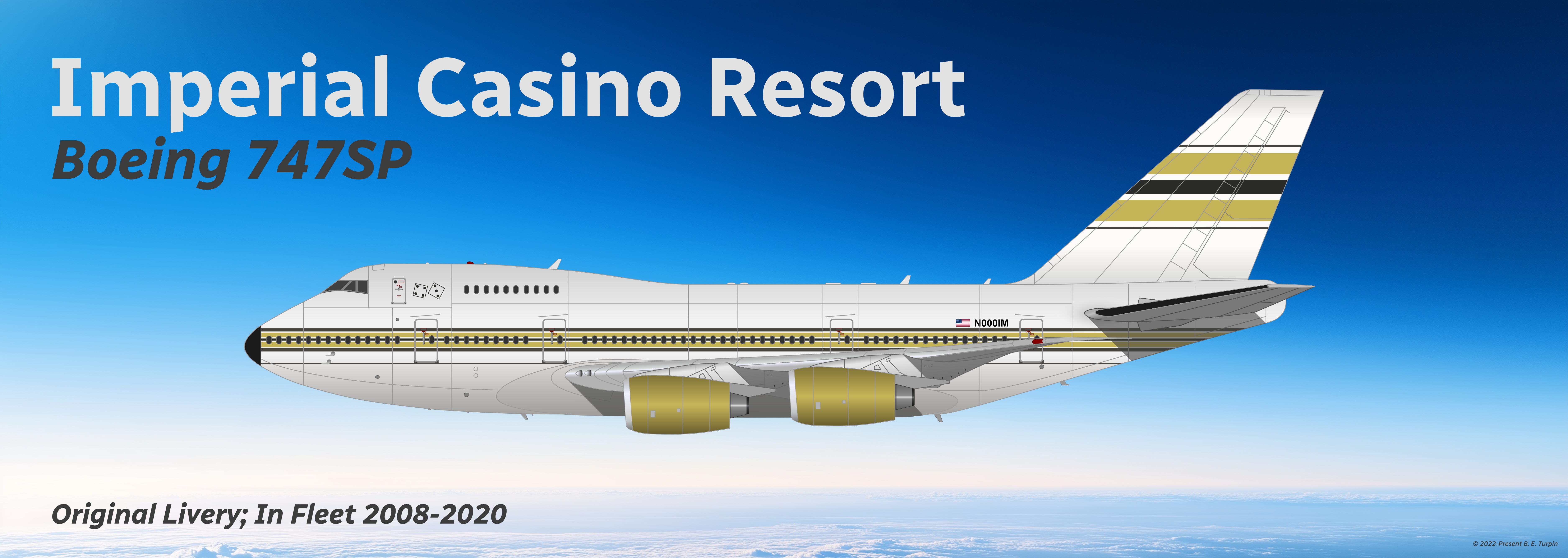
The Boeing 747SP proved to be an aircraft that competed with or outperformed the DC-10 and L-1011 in nearly every aspect. It also had the advantage of sharing near-total commonality and interoperability with the existing 747 fleet, a huge advantage for airlines already flying the 747. When it entered service in 1976, the 747SP became the world’s longest-range airliner, a distinction it held until one of its younger siblings the Boeing 747-400 was introduced in 1989.
When it was first introduced, the Boeing 747SP was available only with Pratt & Whitney JT9D-3A engines. From 1978 onwards, Rolls-Royce RB211 engines became a 2nd, though less popular choice.
No other variants of the Boeing 747SP were produced except the base passenger model, and none of them received aftermarket freighter conversions, as was typical with other 747 variants.
Post Production
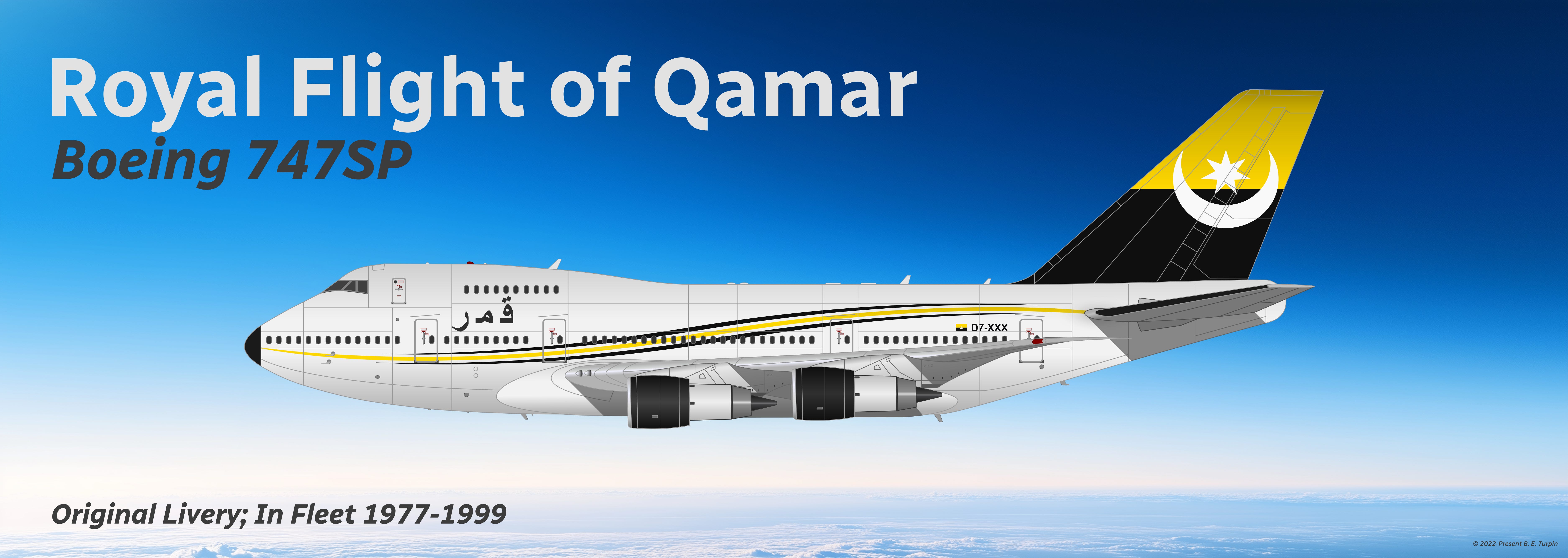
As unique and capable as it was, the Boeing 747SP was not a big seller for Boeing. Although the company originally believed the market for the 747SP to be 215+ aircraft, primary production of the 747SP ended in 1982 after building only 44 aircraft during its initial run - the program’s approximate financial breakeven point. A final, 45th example of the type, a special request VIP aircraft for the government of Abu Dhabi, was built and delivered in 1989.
As of early 2026, two Boeing 747SPs are still in active service, both of which serve as testbed aircraft for Pratt & Whitney Canada.
Reference: Wikipedia.
Stats
Stats displayed are for the Boeing 747SP quadjet aircraft.
Name: Boeing 747SP
Origin: Everett, Washington USA
Role: Four Engine Truncated Wide-body Jet Airliner
First Introduction: 25 April 1976
Status: Out of Production; In Limited Testbed Service
Cockpit Crew: Three (pilot, copilot, flight engineer)
Seating: 230-311 standard, 400 max
Engines:
4 x Pratt & Whitney JT9D-3 or
4 x Rolls-Royce RB211
Cruise Speed: 540 knots (1000 km/h; 621 mph)
Range: 6650 nmi (12,320 km; 7650 mi)
Service Ceiling: 45,100 ft (13,700 m)